Interview: international bestselling and award winning fantasy author Carlysle Labuschagne

This summer seems to have flown by without pausing for breath. Especially compared to the last few years’ summers, which lasted from April to October with glorious sunshine and more than a few unbearably hot heatwaves here in the UK.

I’m not complaining though. Autumn is my favourite season (yes, I’m that basic) and I definitely prefer being able to sleep comfortably and walk my dogs without sweating before I’ve even left the street.

I will miss being able to let my toddler play outside quite as often, having a nice garden has been a godsend throughout the various lockdowns.

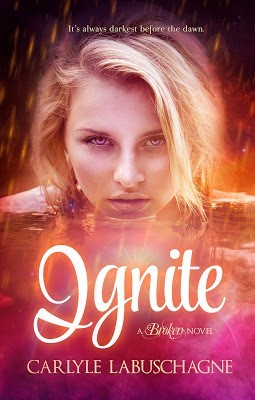
This week, I had the honour of talking to the spectacular Carlyle Labuschagne, USA Today and international bestselling, and international award winning author of A Beast So Beautiful. Here’s what she had to say…
Hi Carlyle, it’s so lovely to speak to you! Tell us a little bit about yourself.

I am happy to be here, Lyndsey. I was born and raised in Johannesburg, South Africa , and writing has been one of my favorite hobbies since I was ten years old. I used to often beg my friends to let me write their essays…

A hobby I had long left behind once the kids were born was decorating, but recently made a huge effort to upgrade my writing room. Few more things to do but must do it when the money comes in. I hate playing any card games. But kick ass at battleship and I need to get back into fingerboard.  

The first thing I did when we moved house during lockdown was decorate my office! I feel like working from home and writing my books means I deserve a really beautiful space to do it in. My husband doesn’t necessarily agree! When did you first discover you were a writer and who encouraged you?

I loved any story. Disney audio and read a long, Cinderella was my favorite. I used to pretend to be ill and sit and watch any story that was on TV at the time. My worst was Cocoon, ET and Gremlins – traumatized me forever. No one had to encourage me to write it was a part of me always. But to write a book, now that only became a reality when I read the Twilight Saga. It seemed so possible and it became possible because of her (Stephanie Meyer).

I love that Twilight was the book that made you realise you could do it too, that being a writer was a career path you could choose. I think mine was Throne of Glass. Do you have a favourite book? And what are your favourite tropes?

My latest favorite is Bone Criers Moon and it’s sequel. It’s very unique and the whole love triangle is very short lived. A Curse so Dark and Lonely and it’s two follow ups are also my favorites. It’s a royal fantasy book where female and male characters both have important roles and both genders are strong, equals.  As for Six of Crows and Crooked Kingdom it’s follow up is my favorite because it takes a fantasy world and puts it in a heist and is filled with the thrill of conning for a living. And as for the trope – male leads.

That’s really interesting, because there’s been such an explosion of incredible female MCs over the last couple of decades that it can feel really surprising and fresh when a book (especially YA) is told from a male perspective. Can you tell us a little about your published books?

First published book was The Broken Destiny, it was about South African, genetically-enhanced children exiled to planet Poseidon, where they live side by side with Zulu’s and Minoans. 
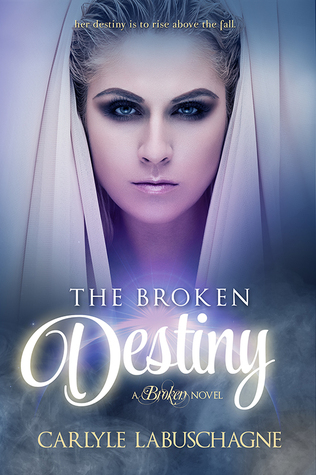
Buy it here.

My most recent release is my first epic fantasy, fairytale kind of spin on GoT meets Beauty and the Beast, where the prince is locked in the tower because he is a beast – A Beast So Beautiful.

Add it to your TBR here.

Wow, those covers are stunning! I love the sound of Game of Thrones meets Beauty and the Beast, I’ll definitely be adding that to my to be read pile. Where do you find inspiration for your characters or settings? 

My settings and the worlds I create are some from memory, I adventured a lot in rivers, dams, hiked, swam in rivers and walked small villages growing up with my African nanny. Walking through the bush to get to the river every Saturday. I have always really lived in every moment, the smell, the noises, the feel, the mood and the voice of nature. For The Broken Destiny I made up my own world, a purple planet with three moons, and turquoise oceans, silver shimmering trees and modern technology in their dorms. 

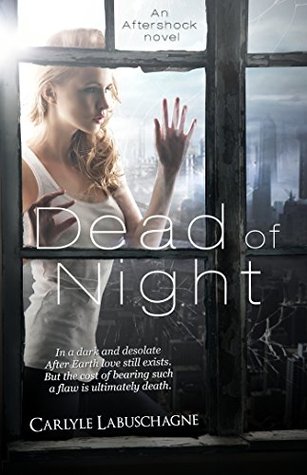
In Dead of Night I created a toxic world where fish were poisonous to eat, acid rain could burn through cars. Swamp gas could put you on a trip. And mountains were made from bombs and others just broken in half. 
In A Beast so Beautiful, the world was pretty much like it would have been back in King Arthur’s day. But they had a white blight of snow and ice that forever stayed there, separating two kingdoms. One kingdom was very primitive in ways and relied on magic that was banned by Rurith Kingdom after the Queen died and the prince was locked in the tower when the king realized he was born of magic. I write very descriptively, the sound talons make on stone, how the wind howls around the steeples of the castle and the termites crackle under leaves. 

That sounds so immersive, it’s amazing that you’ve created so many completely distinct worlds for your stories, all totally unique. Do you consider yourself a plotter, pantser or plantser? 

Half and half. I pants the first half, then make notes of all the answers that need to be tied in and plot out the second half. 

That sounds like a perfect way to go, it can be difficult to know when to stop plotting and start writing when you’re a plotter or plantser. I reckon a free written first draft must be a much quicker, more organic experience. Even if it does mean somewhat more editing! What are you working on right now?

I am working on A Love So Lonely, the second in the A Beast so Beautiful duology. And I am half way through it. This is very different to the first book as we go way ahead in time, but the prince still remains in the story. 

I’m currently working on book two in a series as well, and I’m finding it a really strange and different experience to book one. Trying to balance where I want the story to go with reader expectations and the pressure of whether it’ll do well is a really interesting atmosphere to write a book in! What one piece of advice would you give aspiring authors? 

Write every day. Network on Facebook and Twitter everyday. Build up a readership while writing. 

Great advice, I’ve discovered the most amazing writing and reading community on Facebook since publishing my debut novel last year. Networking is so important in ever career and industry, it’s funny that we don’t expect it from writing as it’s such a solo activity, but publishing takes a village!

Thank you so much for chatting with me today, Carlyle! Before you go, how can we find out more about you and your books? 

Visit Carlyle’s Website and sign up to her email list: https://carlylelabuschagnebooks.com

Follow Carlyle on Instagram: https://www.instagram.com/carlylelab/

Like her Facebook page:   https://www.facebook.com/carlyleL

Find her on Twitter: https://twitter.com/AuthorCarlyle


That was so much fun, I hope you enjoyed finding out more about Carlyle and her stories. According to Goodreads, she has 23 distinct works with over 700 ratings and an average of over 4 stars, and with books that cover sci fi, fantasy and fairy tales, you know there’s something in her repertoire that you’ll love. Personally, I’m going to download A Beast So Beautiful to my Kindle right now.

Go pick out one of Carlyle books and add it to your Goodreads shelf!

Lyndsey

x
Review: Red Rising by Pierce Brown

I’d heard so many good things about the Red Rising Saga from other book bloggers and readers online, so when I saw it was on offer on Audible a few months ago, I had to buy it!

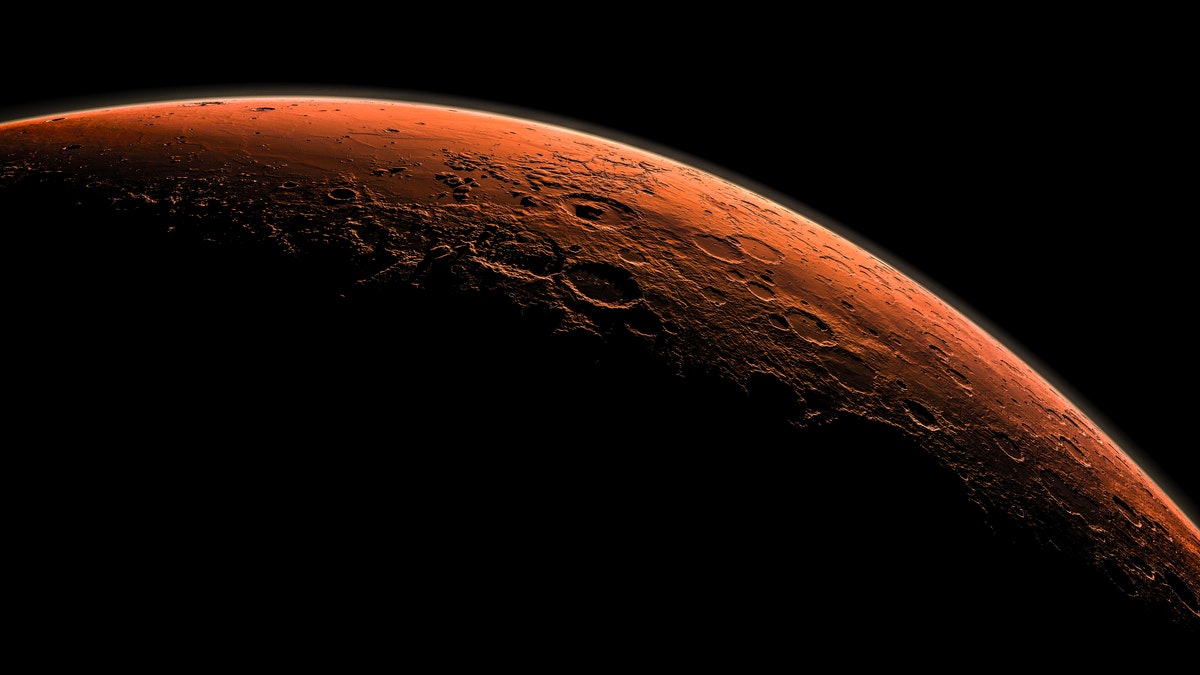
TL;DR Darrow is a Red, one of the miners living in a colony on Mars, tasked with the job of making the planet inhabitable for the rest of mankind when Earth dies. Treated as second class citizens by the ruling class, the Golds, there’s a rebellion slowly building beneath the surface, until a shock event thrusts Darrow into the centre of a revolution and exposes the dark secret that Mars may not be all that uninhabitable after all…

Red Rising by Pierce Brown

3.5 stars

Darrow lives in a slum, works in a mine and dreams of a future where Mars is safe and inhabitable for the millions of people left living on a dying Earth. He knows he won’t live long enough to see the day his and his fellow miners’ efforts come to fruition, and he’s OK with that. His kids, or his grandkids, or his great grandkids will enjoy the freedom and safety he works so hard for, day in, day out.

He’s pretty damn good at his job – the best, you might say – and well respected in his community. He’s also married to the love of his life, Eo, at the ripe old age of sixteen. Life under the surface is short and explosive (sometimes literally), so there’s no time to waste when it comes to true love.

Unfortunately though, things aren’t quite what they seem. (Are they ever?) The Golds, a race of “superior” humans that rules over the Reds and other colours, have been keeping a dark secret for decades – the surface has been inhabitable for years and is now covered with a stunning metropolis overflowing with wealth, decadence, and indulgence whilst the Reds suffer and struggle for survival in the mines.

But a rebellion has been brewing for a while, and the rebels believe they’ve found their front-man in Darrow. He’s not convinced though, until a series of shocking and heartbreaking events forces him to accept his new fate.

Disguised as a Gold (think the residents of the Capitol in The Hunger Games), he’s thrown into a competition that pits young members of the Gold caste against each other in a battle of mental and physical fortitude to select the next group of leaders. If he survives, he’ll never be the same again.

Lyndsey's Book Blog (4)

I enjoyed Red Rising, I gave it 3.5 stars, but I had incredibly high hopes after everything I’d heard and it didn’t quite meet them. I wonder whether I might have enjoyed the paperback more, but there was nothing I could pinpoint about the narrator that bothered me, I just can’t put my finger on why this didn’t do it for me like it did for so many others.

One of the reasons I think is because of the other books I was comparing it to, for me it had really strong similarities to The Hunger Games (the segregated castes and deadly competition) and Nevernight (the Ancient Roman influence), two of my absolute favourite books, and it wasn’t quite as good as those two, in my opinion. I still enjoyed it, and would consider continuing to read the rest of the series when I’m caught up on my TBR. Especially as so many people who’s tastes I share, and who’s opinions I respect recommend it.

Have you read Red Rising? Did you love it? Tell me if you think I should read book two!

Lyndsey

x


Lyndsey's Book Blog 2 (4).jpg

Speculation, speculation, speculation

Good morning (or evening depending on which hemisphere you’re in), and welcome back to my blog. Today I thought I’d delve into my favourite genre of fiction, and one many people don’t fully understand or perhaps haven’t even heard of – speculative fiction.

Broadly speaking, speculative fiction deals with what might be, or what could have been, and encompasses a wide range of genres including science fiction, fantasy, horror, supernatural and dystopian, as well as alternate histories.

Speculative fiction has been around for centuries, but it’s still often dismissed as ‘genre fiction’. Genre fiction is also known as ‘popular fiction’, and tends to refer to plot-driven books written to fit a particular genre and attract readers who are already familiar with and fans of that specific genre. It’s most common in crime, fantasy, romance, sci-fi, horror and westerns.

There’s absolutely nothing wrong with genre fiction, it serves to provide readers with content they want to read, entertainment and escapism, and that’s no bad thing. It’s more or less the opposite of literary fiction, which tends to be less easy to pigeonhole as one genre or another, and provides a means to better understand the real world via direct references, rather than using metaphors and allegories. Some high-brow literary fiction fans turn their nose up at genre fiction, but it boasts just as many brilliant authors (think Stephen King, Neil Gaiman and George R.R. Martin) and just as many, if not more sales.

But, not all speculative fiction falls into the category of genre fiction.

Lyndsey's Book Blog (1).jpg

Let’s have a look at a few examples of speculative fiction novels and how they fit into the genre:

Science Fiction

Jurassic Park by Michael Crichton

Jurassic Park

Unless you’ve been living under a rock for decades, you’ve definitely heard of Jurassic Park, whether that’s due to the blockbuster movies or Michael Crichton’s original novel. The basic premise is “what if dinosaurs could be scientifically engineered today?” and the results are, well, catastrophic to say the least. But the science is credible, Crichton has really put some thought into his story, and that makes the books even scarier and more gripping.


Fantasy

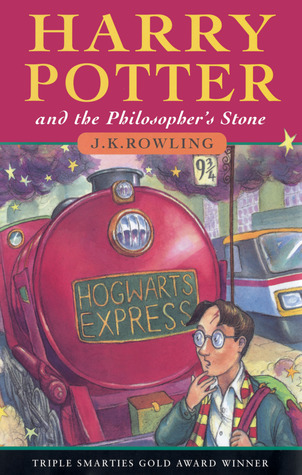
Harry Potter by J.K. Rowling

Harry Potter and the Philosopher's Stone JK Rowling Lyndsey's Book Blog

Another one you’ve undoubtedly come across, again possibly because of the movies, but the source material is much deeper and more detailed than the on-screen version. Rowling started with the question “what if magic was real?” and really ran with it, imagining every possible creature, spell and magical object and combining them in an elegant allegory about good and evil.


Horror

MARY: The Summoning by Hillary Monahan

MARY The Summoning

We’ve all heard some version of the Blood Mary story, you might even have played the game as a teenager, saying her name into the mirror, scaring yourselves silly for a good laugh. Monahan’s dark YA novel asks “what if the legend of Bloody Mary was real?”. Who was Mary, and why is she out for revenge against teenage girls?


Dystopian

The Handmaid’s Tale by Margaret Atwood

The Handmaid's Tale

Dystopian novels often look at a potential, but far-fetched future, focusing on the current day issues we face and asking, ‘what’s the absolute worst case scenario if we continue down this road?’. Atwood’s popular novel has recently been adapted into a brilliantly close-to-the-bone TV series, updated to reflect today’s reality (the original novel was published almost thirty years ago in 1985). The question Atwood focused on is “what if religious fundamentalists took control of the country?”, and her conclusion is equally credible and horrifying.


Nineteen Eighty-Four by George Orwell

1984

Written in 1948, Orwell’s novel speculated about a communist future for Britain, setting the story in 1984 (he literally just swapped the digits round to get his time period) and getting so many things scarily right. Whilst he might be partly to blame for Big Brother, his vision of a future dominated by television and surveillance/visibility is shockingly prescient.


Alternate History

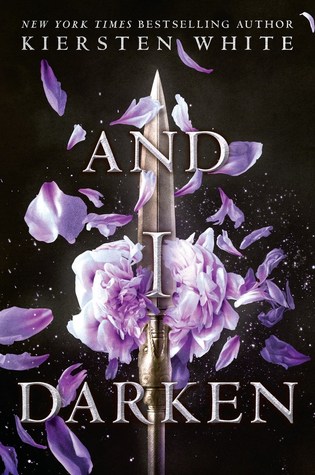
And I Darken by Kiersten White

And I Darken

White’s YA historical fantasy novel asks the question, “what if Vlad the Impaler had been female?”, and how would the gender swap impact on the legend we all know? The story highlights the inequalities between men and women in the Ottoman Empire, and imagines what would have happened if a bold, empowered woman like Lada had been the daughter of the Wallachian king.


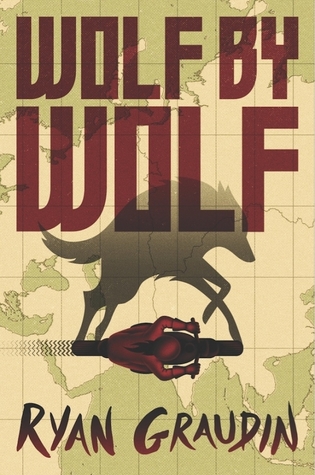
Wolf by Wolf by Ryan Graudin

Wolf by Wolf

Probably one of the most interesting ‘what ifs’ possible: “what if the Nazis had won World War Two?”. Graudin’s novel has Hitler surviving and the combined powers of the Third Reich and Imperial Japan winning the war. With some fantastical elements thrown in, this is a fascinating glimpse of what might have been if the Allies had lost and Nazism survived.


Supernatural

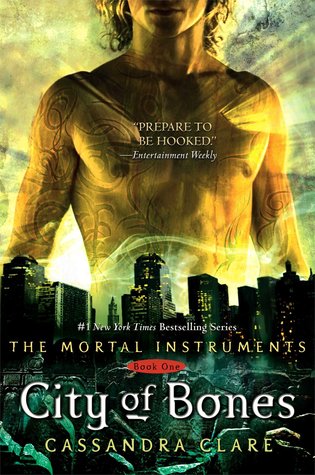
The Mortal Instruments by Cassandra Clare

City of Bones

If you haven’t read the books or seen the 2013 movie with Lily Collins and Jamie Campbell Bower, you might have seen the TV series Shadowhunters with Katherine McNamara and Dominic Sherwood. With the sheer number of supernatural creatures involved, and the vastness of Clare’s fictional world, spanning both space and time over the three series so far (with a fourth in the pipeline I believe), the question The Mortal Instruments centres around is, “what if all the myths and legends were true?”. Mixing urban fantasy with classic supernatural elements, Clare looks at the possibilities in a world where demons, angels, vampires, werewolves, faeries, warlocks, and everything in between, exist.


Speculative fiction isn’t reserved for these genres, if your story looks at what could be, what might have been, or what would happen if, then it might just be a piece of speculative fiction.

Lyndsey

x

Lyndsey's Book Blog 2 (1)