Speculation, speculation, speculation

Good morning (or evening depending on which hemisphere you’re in), and welcome back to my blog. Today I thought I’d delve into my favourite genre of fiction, and one many people don’t fully understand or perhaps haven’t even heard of – speculative fiction.

Broadly speaking, speculative fiction deals with what might be, or what could have been, and encompasses a wide range of genres including science fiction, fantasy, horror, supernatural and dystopian, as well as alternate histories.

Speculative fiction has been around for centuries, but it’s still often dismissed as ‘genre fiction’. Genre fiction is also known as ‘popular fiction’, and tends to refer to plot-driven books written to fit a particular genre and attract readers who are already familiar with and fans of that specific genre. It’s most common in crime, fantasy, romance, sci-fi, horror and westerns.

There’s absolutely nothing wrong with genre fiction, it serves to provide readers with content they want to read, entertainment and escapism, and that’s no bad thing. It’s more or less the opposite of literary fiction, which tends to be less easy to pigeonhole as one genre or another, and provides a means to better understand the real world via direct references, rather than using metaphors and allegories. Some high-brow literary fiction fans turn their nose up at genre fiction, but it boasts just as many brilliant authors (think Stephen King, Neil Gaiman and George R.R. Martin) and just as many, if not more sales.

But, not all speculative fiction falls into the category of genre fiction.

Lyndsey's Book Blog (1).jpg

Let’s have a look at a few examples of speculative fiction novels and how they fit into the genre:

Science Fiction

Jurassic Park by Michael Crichton

Jurassic Park

Unless you’ve been living under a rock for decades, you’ve definitely heard of Jurassic Park, whether that’s due to the blockbuster movies or Michael Crichton’s original novel. The basic premise is “what if dinosaurs could be scientifically engineered today?” and the results are, well, catastrophic to say the least. But the science is credible, Crichton has really put some thought into his story, and that makes the books even scarier and more gripping.


Fantasy

Harry Potter by J.K. Rowling
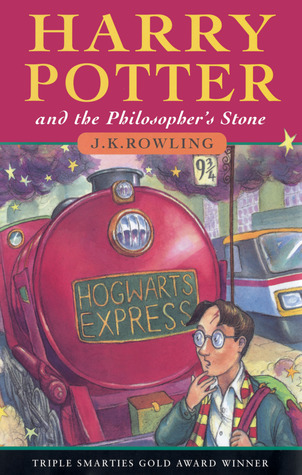
Harry Potter and the Philosopher's Stone JK Rowling Lyndsey's Book Blog

Another one you’ve undoubtedly come across, again possibly because of the movies, but the source material is much deeper and more detailed than the on-screen version. Rowling started with the question “what if magic was real?” and really ran with it, imagining every possible creature, spell and magical object and combining them in an elegant allegory about good and evil.


Horror

MARY: The Summoning by Hillary Monahan

MARY The Summoning

We’ve all heard some version of the Blood Mary story, you might even have played the game as a teenager, saying her name into the mirror, scaring yourselves silly for a good laugh. Monahan’s dark YA novel asks “what if the legend of Bloody Mary was real?”. Who was Mary, and why is she out for revenge against teenage girls?


Dystopian

The Handmaid’s Tale by Margaret Atwood

The Handmaid's Tale

Dystopian novels often look at a potential, but far-fetched future, focusing on the current day issues we face and asking, ‘what’s the absolute worst case scenario if we continue down this road?’. Atwood’s popular novel has recently been adapted into a brilliantly close-to-the-bone TV series, updated to reflect today’s reality (the original novel was published almost thirty years ago in 1985). The question Atwood focused on is “what if religious fundamentalists took control of the country?”, and her conclusion is equally credible and horrifying.


Nineteen Eighty-Four by George Orwell

1984

Written in 1948, Orwell’s novel speculated about a communist future for Britain, setting the story in 1984 (he literally just swapped the digits round to get his time period) and getting so many things scarily right. Whilst he might be partly to blame for Big Brother, his vision of a future dominated by television and surveillance/visibility is shockingly prescient.


Alternate History

And I Darken by Kiersten White
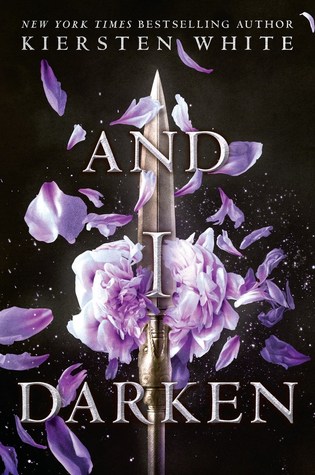
And I Darken

White’s YA historical fantasy novel asks the question, “what if Vlad the Impaler had been female?”, and how would the gender swap impact on the legend we all know? The story highlights the inequalities between men and women in the Ottoman Empire, and imagines what would have happened if a bold, empowered woman like Lada had been the daughter of the Wallachian king.


Wolf by Wolf by Ryan Graudin
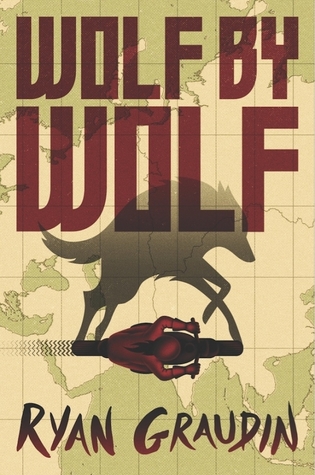
Wolf by Wolf

Probably one of the most interesting ‘what ifs’ possible: “what if the Nazis had won World War Two?”. Graudin’s novel has Hitler surviving and the combined powers of the Third Reich and Imperial Japan winning the war. With some fantastical elements thrown in, this is a fascinating glimpse of what might have been if the Allies had lost and Nazism survived.


Supernatural

The Mortal Instruments by Cassandra Clare
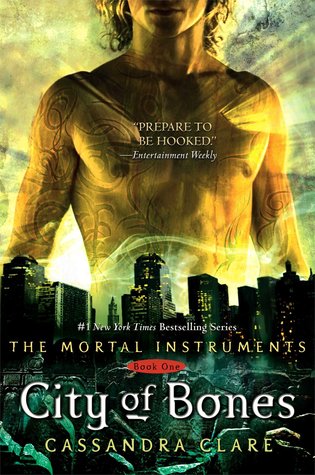
City of Bones

If you haven’t read the books or seen the 2013 movie with Lily Collins and Jamie Campbell Bower, you might have seen the TV series Shadowhunters with Katherine McNamara and Dominic Sherwood. With the sheer number of supernatural creatures involved, and the vastness of Clare’s fictional world, spanning both space and time over the three series so far (with a fourth in the pipeline I believe), the question The Mortal Instruments centres around is, “what if all the myths and legends were true?”. Mixing urban fantasy with classic supernatural elements, Clare looks at the possibilities in a world where demons, angels, vampires, werewolves, faeries, warlocks, and everything in between, exist.


Speculative fiction isn’t reserved for these genres, if your story looks at what could be, what might have been, or what would happen if, then it might just be a piece of speculative fiction.

Lyndsey

x

Lyndsey's Book Blog 2 (1)

Review: Nevernight by Jay Kristoff

It’s been a couple of months since I read Nevernight now, but I just downloaded the audiobook of Godsgrave and I’m so excited to dive back into this world!

I’d never read any of Jay Kristoff’s books before Nevernight, but I’ve heard good things about the Illuminae series, and Nevernight sounded right up my street. Luckily, it absolutely was! I haven’t read a new fantasy series this good in ages.

TL;DR At just eight years old, Mia Corvere watched her father die. Since then she has trained with her mentor in preparation for applying to enter the Red Church, a group of skilled assassins who live under a mountain. Her long term plan is revenge against the men who killed her dad. Her short term plan is surviving her training.

Nevernight Jay Kristoff Lyndsey's Book Blog

5 stars

I’m not sure what I expected from this book, but it definitely wasn’t what I got. The Red Church is basically Hogwarts for teen murderers, and I am here for it. Mia is a wonderfully conflicted mini murderess, whose pet is an undead sort of shadow cat called Mister Kindly. He’s a sarcastic bundle of not-fur. Have you run out to buy this book yet? Just go, you won’t regret it.

“’Never Flinch.’ A cold whisper in her ear. ‘Never fear. And never, ever forget.'”

The classes Mia takes sound utterly fascinating and also deadly, subjects like poisons, weapons training and the art of seduction (because every professional killer needs a few good chat up lines and a come-hither smile). The teachers are mysterious and ruthless, it’s a wonder any of the kids survive their first semester, let alone graduate to become fully-fledged assassins.

“You’ll be a rumor. A whisper. The thought that wakes the bastards of this world sweating in the nevernight. The last thing you will ever be, girl, is someone’s hero.”

Unfortunately, only two of the class can become Blades (super lethal assassin types) after graduation, the rest must stay under the mountain and basically become their servants. Is it any wonder someone is killing off Mia’s class mates one by one? But is it just a ploy to win one of the two coveted Blade positions, or is something bigger going on in the Red Church?

Review Nevernight Jay Kristoff

Kristoff’s world-building is crazy amazing in this series, which just adds to the other-worldliness and mystery of the plot and characters. Three suns rise and set over Godsgrave, the city built amongst the bones of a long-dead god, meaning it’s almost never night (hence the title). One of those suns is red, casting a bloody glow over everything every now and then. Kristoff actually got an astrophysicist friend to design a trinary solar system for him, so the whole concept is very accurate and well imagined. A day is called a turn, because the planet still turns even if the sun doesn’t set (I imagine it’s supposed to be at least somewhat similar to Earth, so a day is roughly 24 hours). I just loved the little details the author included, they really make the story feel fully formed.

“The brighter the light, the deeper the shadow.”

There’s a lot of Italian influence in the novel, which you might have guessed from Mia’s name. I wonder whether the strong themes of religion inspired the choice? Either way, it helps to anchor the stranger elements of the world and story in something/somewhere we can all imagine, even if you haven’t visited Italy or the Vatican.

You might have guessed by now, but this is a very graphic series, both violently and sexually. The characters are around sixteen, but this is definitely not YA. In the world of the story, children don’t seem to get much of a childhood, and they are much older and wiser than their years as a result of the environment they’re raised in, so 16 is more like 18, or even older, in the novel.

pink divider

“The books we love, they love us back. And just as we mark our places in the pages, those pages leave their marks on us.”

I can’t think of a single thing I didn’t like about Nevernight, it was gripping and twisty and stabby and I loved every minute of it. The ending was a surprise, and I’m desperate to get stuck into Godsgrave to see if everything we’re told at the end of book one is true, fingers crossed some of it was just a ruse (no spoilers!).

I’m giving Nevernight five stars because it’s probably my favourite book I’ve read so far this year, I honestly couldn’t get enough of it and must have listened to it every chance I got. I was devastated when it finished and I had to wait three months for the sequel to come out! Definitely read this if you like super dark fantasy with rich world building and plenty of stabbing and sexy times. If you’re not so cool with the graphic elements or swearing, maybe steer clear. But you’ll be missing out 😉


Lyndsey

x

I am a member of the Book Depository affiliate program, so if you click through and buy any of the books mentioned in this blog I might make a little commission, but I am not paid to review books and all reviews are my own opinions!

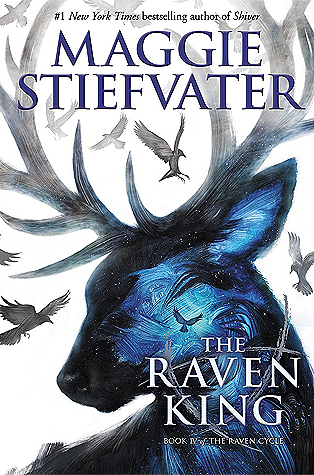
Review: The Raven King by Maggie Stiefvater

I finished The Raven Cycle series! I really enjoyed the series as a whole, and the final book was no different. If you haven’t read any of the first three books you can check out my reviews: The Raven Boys, The Dream Thieves, Blue Lily, Lily Blue. Obviously, there are spoilers for book one in the other two reviews etc. so only read on if you don’t mind being spoiled!

Onwards to my review of The Raven King

TL;DR The gang’s search for Glendower comes to an end, Blue tests the truth of her prophecy, Piper Greenmantle tries to auction the demon off to the highest bidder and Ronan discovers the connection between his dream thief abilities and Cabeswater. Oh, and there’s lots of kissing.

The Raven King Maggie Stiefvater

4 stars

Where do I start?? This was probably the strangest book in the series, and that’s really saying something. This series is one of the weirdest, eeriest and most magical I’ve ever read. It wasn’t perfect, but I almost loved it more for that.

The main plot lines from the previous books all come to some kind of resolution, even if it’s not quite what we hoped for or expected. The ending leaves a lot to the imagination, but for a series where imagination has been essential throughout, and dreams are an integral part of the narrative, I expected nothing less.

The hunt for Glendower comes to an end, our ships are all ready to make sail (I won’t tell you which ones do!) and the events set into motion in Blue Lily, Lily Blue finally come to a head. The demon found in the caves by Piper and Neeve draws a crowd of magical artefact enthusiasts to Henrietta, but its power puts the entire town in danger and only our favourite foursome can stop the creature.

There are plenty of shocking revelations about the group and their abilities, their ties to Cabeswater, and what Cabeswater really is. I was quite satisfied with what we learned in The Raven King, even if we were left with lots of questions to ponder on our own. I know a lot of readers found the ending really anticlimactic, and this book is certainly not my favourite of the series, I found it less action packed and gripping than the other three (Blue Lily, Lily Blue is my favourite, in case you’re wondering), but I still consider it a worthy finale in many ways. I don’t mind being left with questions, it means I’m still thinking about the book days later, rather than completely forgetting about it the instant I put it down.

Perhaps one of the reasons I wasn’t as frustrated as others when I finished this book is because I read it so long after it was originally published, had seen online how disappointed lots of readers were and could manage my expectations accordingly, and Maggie has recently announced a Ronan trilogy, which will hopefully answer some of my questions. Ronan and Adam have been my favourite characters from the beginning, so I’m really excited to read a trilogy focused on them rather than Blue and Gansey.

The Raven King Review Lyndsey's Book Blog

My favourite part of the book has nothing to do with our fantastic foursome, or the psychics from 300 Fox Way, or even the Grey Man. My absolute favourite part was when Henry Cheng (one of the Vancouver crowd who idolise Gansey) talked about the language barrier between his thoughts and his words:

“It wasn’t that Henry was less of himself in English. He was less of himself out loud. His native language was thought.”

And how his mother, Seondeok struggled to make herself understood in English and would always say “It is that…but also something more.”

“Something more explained perfectly why he could never say what he meant – something more, by its definition, would always be different than what you already had in your hand.”

It sums up beautifully what it’s like to speak another language and feel like you’re not quite yourself in your second language. You can’t say what you mean with as much clarity and simplicity as in your native language, and you feel like your personality is being filtered through your limited vocabulary. I speak Spanish and on my year abroad in Spain I didn’t feel like myself at all, there’s something about the words we use and the way we express ourselves with language that’s absolutely intrinsic to our identities.

divider-grey

I gave The Raven King 4 stars, as I say it’s not my favourite, in fact I’d go so far as to say it’s my least favourite of the four (and I struggled with a few things in The Dream Thieves) but for one of my new series obsessions that’s definitely not to say it was a bad book or I didn’t love it. The setting and characters are everything in The Raven Cycle, and the moody atmosphere coupled with the mystical elements give it such an intense and claustrophobic feel. I’d definitely recommend reading this series if you love YA fantasy and any of Maggie Stiefvater’s other books.

Have you read The Raven Cycle? Are you dying for the new Ronan trilogy, like me?


Lyndsey

x

I am a member of the Book Depository affiliate program, so if you click through and buy any of the books mentioned in this blog I might make a little commission, but I am not paid to review books and all reviews are my own opinions!

 Review the Raven King