Review: The Scorpio Races by Maggie Stiefvater

I am a big Stiefvater fan, having read The Wolves of Mercy Falls series and Books of Faerie (Lament and Ballad – still waiting for that third book, Maggie!) years ago. The Scorpio Races had been on my list for so long, but to be brutally honest I wasn’t sure about the premise. Flesh-eating water horses? A standalone?? No sequels???

How wrong I was. This novel is perfection! Yes, I am gutted that there won’t be a second or third instalment, but the story tied up so neatly at the end that I can’t even complain.

TL;DR Every November flesh-eating water horses crawl out of the sea onto the island of Thisby, and riders race them on the beach to win money. The boy who wins every year wants to buy his horse off the stables he works for. A girl who’s parents were both killed by the horses needs to win enough money to save the house she and her brothers live in. Throw in magic, rituals, an island with its own personality and a supporting cast of vividly drawn characters, and you’ve got The Scorpio Races.


scorpio-races

5 stars

This book has one of the best opening lines in all of literature (according to me):

“It is the first day of November and so, today, someone will die.”

If that doesn’t suck you into the story and make you want to read it, nothing will. But I’ll go on anyway…

Stiefvater (pronounced steve-otter, the things you learn listening to audiobooks) based the book on the myth of the Capaill Uisce (pronounced ca-pull ish-ka – again, audiobooks), which is a legendary Celtic water horse that lives in the sea and eats human flesh.

At the end of the audiobook, Maggie read her Author’s Notes, and explained some of the inspiration for the story. She got the idea to write about water horses when she was younger, but she was never happy with the story she created or how the myth fit into it. In the end, she realised she could pick and choose which bits of the myth she wanted and which bits to discard. So, her version of the Capaill is different to every other.

divider-grey

Back to the story, then. The action takes place on an island just off the mainland called Thisby. We’re never told the name of the mainland, but the audiobook is narrated by two Brits, so I like to imagine it’s England, and Thisby is maybe the Isle of Wight? The aesthetics of the island fit for me, and the Isle of Wight is a major sailing mecca, so the idea of Thisby as a big racing community (albeit, on horses instead of yachts) makes sense to me.

The island is almost a character within itself, the residents regularly refer to Thisby as though it is a living thing rather than a piece of land. Especially, when the riders each had to make a blood sacrifice to mark their participation in the races, I felt that the island was more than just the place where the characters lived, it had a power over them.

“Tell me what to wish for. Tell me what to ask the sea for.”
“To be happy. Happiness.”
“I don’t think such a thing is had on Thisby. And if it is, I don’t know how you would keep it.”

One of the major themes in the book is the choice between staying on Thisby and leaving for the mainland – this is the root of one of the main conflicts of the story. For many, the island has a grip on them that they don’t understand, for others, the island is oppressive and they need to get away.

The mystical elements in the book were really interesting – the horses themselves and the magic they seemed to possess, convincing humans to walk into the sea and be dragged under or eaten. The luring power of the sea to both the horses and the men – Sean is constantly referred to as having one foot on the land and one foot in the sea. The festival where the woman in the horse head mask gave Sean a seashell to wish upon. There were lots of references to superstitions, rituals and beliefs held by the people of Thisby.

divider-grey

My favourite thing about the book, though, was the characters. Sean is a stoic, reserved nineteen-year-old, whose father was a rider before him, and has won the Scorpio Races four times in the last six years. He has a way with the horses, both normal and Capaill Uisce, and his Uisce mount, Corr, is the fastest and most loyal horse on the island. Kate, or Puck as everyone calls her, is a strong-willed, resilient girl, living with her two brothers since the death of both of their parents at the hands of the Capaill Uisce. She decides to take part in the Scorpio Races, despite her brothers’ protests, in order to win enough money to make sure they don’t lose the house they grew up in.

Both Sean and Puck had such strong motivations and reasons for winning that I found it impossible to decide who I was rooting for to win.

I loved the incredibly slow-burning romance between them, it was far more believable than many YA romances, especially with two such independent, stubborn and hard-headed characters. They were a perfect fit!

“I think every now and then about Sean’s thumb pressed against my wrist and daydream about him touching me again. But mostly I think about the way he looks at me – with respect – and I think that’s probably worth more than anything.”

I gave The Scorpio Races 5 stars, it’s my new favourite by Maggie Stiefvater, but I have heard nothing but good things about The Raven Cycle, which is next on my list now!

The one question I have left over is whether the book has any further links to A Midsummer Night’s Dream than the names of Thisby and Puck? I Googled it, but haven’t found a definitive answer. I’m just curious because the names of some of my characters (Auberon, Xander and Baz Demitree) are inspired by the play too (Oberon, Lysander and Demetrius).

If you read and enjoyed any of Stiefvater’s other books and haven’t picked this one up yet, do it now! It’s the best audiobook I have listened to in months, if not ever. The performances were excellent, with Steve West reading for Sean and Fiona Hardingham for Puck.

Have you read The Scorpio Races? Did you love it? Tell me in the comments, I must know! And, how perfect is this image? She reminds me so much of Puck 🙂

Lyndsey

x

I am a member of the Book Depository affiliate program, so if you click through and buy any of the books mentioned in this blog I might make a little commission, but I am not paid to review books and all reviews are my own opinions!
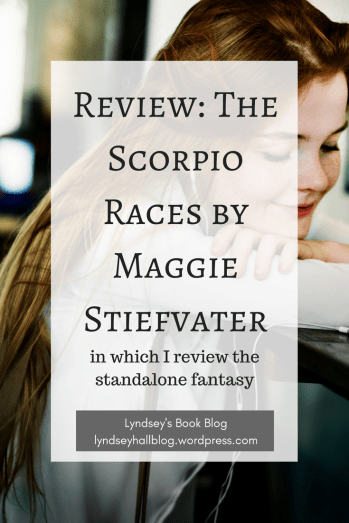

Scorpio Races Review.png

Writing great dialogue

So, if you saw my last post, Editing your Novel, you’ll know I’m working on draft two of my current work in progress, The Fair Queen.

One of the main things I’m trying to do is perfect my dialogue, as a newbie writer it’s definitely not my strongest suit. However, it is one of the most important things to get right when writing a novel, readers (including me) absolutely love snappy and well-written dialogue. Whether it’s witty banter, or emotive declarations, dialogue is key to keeping your readers’ interest.

I can’t give you the secret to perfecting your novel’s dialogue, sadly (because I don’t have it -maybe there isn’t one!), but I can share the potential pitfalls and advice that I have come across in my research.

Let’s talk dialogue.


Dialogue Drama.png

Dialogue Tags

Before we get down to the bare bones of conversation itself, let’s take a little look at dialogue tags. I mentioned this in my post Editing your Novel, so feel free to keep scrolling if you’ve just read that. Still here? Let’s proceed.

Dialogue tags are the bits that tell you who is speaking, e.g. ‘said Steven’, or ‘shouted Denise’. There are three schools of thought that I have come across on this subject, and they are the following:

Said is best – many authors believe that ‘said’ is the most innocuous and least likely to disrupt the reader as they don’t even notice the tag when reading.

Said is boring – some authors think that using said for the majority of interactions is repetitive and dull.

Dialogue tags are bad – these authors prefer to use action to demonstrate who is speaking, avoiding dialogue tags altogether.

I’ll be honest with you, when I was writing my first draft I fell into category one. I used ‘said’ 90% of the time, and a handful of alternatives like ‘asked’ (the second least obtrusive dialogue tag, apparently) the rest of the time. If you’re writing your first draft and have read many writing blogs you’ll know that most of the advice says to just get your story down on paper, don’t worry about making it pretty or coherent, just write it. So, that’s what I did. It wasn’t until I finished the first draft and was about to start the second that I read more articles on editing and found that, actually, I prefer category three.

So, now a major part of my rewriting is removing dialogue tags and making sure that the surrounding action tells the reader who is speaking. It’s making for a much cleaner, more stream-lined story, and I’m all for that.

Character Voice

This is one of the things I know I really need to work on – giving my characters distinct voices so that readers can tell them apart and they don’t all just sound like me. How do you do this? I have no idea. OK, I have a couple of ideas, but they may or may not wor for you.

Accents & Dialects

First of all, from what I’ve read it’s almost always a bad idea to suggest an accent by misspelling words or otherwise making their dialogue stand out from the other characters’. You’re much better off just telling the reader at the beginning ‘she spoke with a strong Cockney accent’, or ‘he was French, if his accent was anything to go by’.

I think there are certain places where writing in dialects can work, but you are running the risk of offending readers if it’s not done sensitively.

If you read Wuthering Heights at school like I did, you’ll recognise this from Joseph the servant’s dialogue. He’s a broad Yorkshire gent and most of his dialogue is completely unintelligible (even I couldn’t understand half of what he said and I’m from Yorkshire!). Now, I don’t think any Yorkshiremen were upset by Emily Bronte’s representation, and I wonder if that’s because the Brontes were from Yorkshire themselves, although I don’t believe they spoke in a dialect like Joseph’s. My point is, use this technique sparingly and do your research!

A good way to emphasise someone’s background in their dialogue might be to use slang terms and phrases that are common in that region. I’ve tried to incorporate the odd local turn of phrase into Aria’s speech, as she’s supposed to be from near to where I live in the Midlands, but too many cliches and well-known sayings can annoy readers. Plus, she’s a teenager, which has its own lingo, separate from any regional dialect.

Personality

Personality-wise, my characters all vary pretty strongly, and that can be tricky to convey through dialogue. Aria is quite hot-headed, reckless and stubborn, so she can be a bit sarcastic and snappy at times, but she’s ultimately loyal and big-hearted. The things she says and the way she says them tends to have a lot of emotion behind it – teenagers tend to feel things very keenly, so I’ve tried to demonstrate that.

As for the Fair, they’re a remnant from a previous time so they speak in a more formal tone and register than Aria. I’m trying to show this by using more traditional words and removing contractions, so instead of “don’t”, I’m using “do not”, etc. It’s not quite as simple as that, but that’s the crux of it.

As individuals, Xander is a more reserved, cool person so he speaks relatively little and his interactions show (in theory) that he is standoffish. Rainer is the mentor and he’s taken on an almost fatherly role to the rest of the group, so he’s quite warm but in a way that reveals his position as a respected elder. He is encouraging rather than critical and openly cares, even if sometimes it’s tough love. Kiefer and Coulter are both cheeky, funny guys who love a bit of banter, but they’re two sides of the same coin. Kiefer is rebellious and willing to take a stand when he believes something isn’t right, whereas Coulter is much more obedient and respectful, to the point where he ends up doing things he disagrees with because he’s been commanded to by his superiors. Then we have the twins, Aro and Quade. Aro is a lover not a fighter, he gets dragged along by his older brothers, but is not really interested in going on missions or battling enemies. Quade on the other hand wants to be taken seriously by his brothers, but he is highly-strung and immature so he always ends up the butt of the joke.

The key to portraying your characters’ personalities through their dialogue is to know them inside out, so fingers crossed I’ve managed to convey all of that in the book!

Purpose

Finally, dialogue needs to have purpose. It needs to advance your plot, add to your story’s conflict or expose something about your characters. Preferably all three!

When you speak to your friends or listen to a stranger’s conversation in a coffee shop, you’ll notice that there are a lot of pauses, filler words like ‘um’ and ‘er’, and random interjections. You need to cut that out when writing. You only want to include the important stuff and none of the padding, fictional conversations should present a reduced, polished version of the real thing. Have you ever noticed that when people speak on the phone on TV, they never say goodbye? They just hang up. Because goodbyes are unnecessary to the story, they’re just padding. Be sparing with your hellos and goodbyes, and any other social niceties that don’t add to your story.

Create conflict within your conversations. They don’t all have to relate directly to your main conflict, even a small one will ramp up the tension and keep your readers’ interest. Use your dialogue to show the difference between two characters’ motivations and goals. It doesn’t have to be an argument, or a direct disagreement, but opposing opinions and desires will give readers an idea of the characters’ personalities and the upcoming action – if done right.

This is something I need to work on, I struggle to make a conversation sound natural without including fluff and filler. It’s definitely one of the things I’ll be focusing on during my editing process.


And, that’s where I’m at so far! It’s not an exhaustive list of dialogue tips so hop over to Google and check out a few more articles if you’re looking to perfect your characters’ conversational skills. I can recommend 9 Rules for Writing Dialogue from Novel Writing Help.

See you next time!


Lyndsey

x


Editing your novel

I’m currently working on the second draft of my WIP The Fair Queen, and I wanted to share a few things I’ve learned along the way about this phase of the writing process.

There’s a lot of advice about rewriting, revising and editing your manuscript online, and some of it is brilliant, but some of it is pretty vague and unhelpful for newbies like myself. So, I’m going to share my method (bear with me, it’s my first novel and my first ever second draft!) and if it works for you, then great, but if your method is a bit different please let me know in the comments, I’d love to hear about other ways of tackling it.

First things first, I finished my first draft at the end of January, with just over 69k words. I was aiming for 80k, but with a bit more research into standard genre word counts I found that most initial YA fantasy novels (i.e. first of the series, or standalones) fall under 80k, usually between 50 and 70k. I also have a good few notes about story lines I want to add and remove, scenes I need to write or delete, and ideas that popped into my head towards the end of the book that I would need to go back and weave through from the beginning in draft two. So, who knows how long the second draft will end up? At this rate it could be shorter or longer.

Anywho, on with the show!


editing-your-novel


Get some perspective

The first thing I did after finishing draft one was take a few weeks off, get some distance from my manuscript and really just recharge my batteries. After five months of writing my story I was pretty drained, and probably not in the most objective position when it comes to rewrites.

By the time I picked my laptop up again and dusted off Word Online, I actually really enjoyed rereading those first few chapters I had written back in September/October, and felt ready to completely rework them. I wasn’t upset about the story lines, characters or sections that had to go in order to streamline the story and bring it back into line with where I wanted it to end up.

Rereading

I’ve seen a lot of advice that recommends putting your first draft on your Kindle or tablet (cheaper than printing it out!) and sitting down, maybe with a notepad and pen, and reading the whole thing from cover to cover to get a sense of the story, character development, etc. The big picture things that you will want to tackle before getting into the nitty-gritty of phrasing, grammar and fine detail.

I decided not to do this with my second draft. I’m going to do it after, and if a third draft is required before I send it out to beta readers, so be it. I just had too many big changes I wanted to make that I couldn’t face reading it knowing how different I wanted it to be. I just wanted to get stuck into making those changes so that when I finally read it through from start to finish it would be as close to the final story as possible.

Does that make sense? Do you think I should have read it through anyway? I’m not completely sure, but that’s the decision I made and I’m sticking to it!

Rewriting

The one major piece of advice that I did take, and am really glad I did, was the recommendation I came across from elumish on Tumblr to start a new document and completely rewrite your second draft. I cannot recommend this enough, I have reworded almost every line of my first draft and made some important stylistic changes along the way.

This was an essential step for me, mainly because of the aforementioned major plot changes I had decided on, but also because this is my first attempt at writing a novel, I want to make sure it is the best possible piece of writing that I can do, and I don’t want to short change myself by just skim-reading and changing a few words here or there.

If you take anything from this blog, let it be this – open your manuscript, open a blank page and rewrite your first draft!

Tense

My WIP is written in third person past tense, there is only one POV, but I felt like this was the tense that best suited the story. I’ve read a few articles about how first person present is the tense preferred by readers, the one used by authors like Suzanne Collins in The Hunger Games, and it’s the best for letting readers get into your characters heads, but I think either tense is fine as long as it suits your story. I think, like with all things, there are trends and first person present is having a bit of a moment.

The most important thing is to be consistent. Having multiple POVs that switch between tenses will only make readers feel disconnected from the characters and the story. A prologue or epilogue in a different tense might be a fun way to switch it up. Just make sure that your manuscript doesn’t accidentally flip from one to the other mid-way through!

Active voice

The active voice refers to when someone ‘does’ or ‘did’ something, depending on your tense. If somebody ‘was doing’ something, you’ve slipped into passive tense and that can really weaken the action in your book. Need an example?

Passive: “Laura was doing the dishes and the phone was ringing.”

Active: “Laura scrubbed the dishes and stacked them in the drying rack. The phone rang.”

It’s a terrible example, but you get the gist. The first one is boring and plodding, and the second one is much more dynamic.

Go through your manuscript and hunt down any sentences where you’ve used the passive voice, you could search for ‘ing’ and just scroll through these picking out the ones that don’t belong.

Dialogue tags

I’m calling this one a stylistic change, it might not work for every writer or every story, but I think it is one of the key changes that has improved my story – or at least the telling of it. I read several writers’ opinions on dialogue tags, some believe ‘said’ is the most innocuous and least jarring to the reader, others think using ‘said’ every two lines is too repetitive. Then, I read about a third option, one that I’ve come across while reading but never really noticed. Which says a lot.

Using action to show who is speaking. I’ll give you an example, because I know you love those:

Said: “Hi, Sarah,” said Mark.

Other dialogue tag: “Hi, Sarah,” called Mark from the kitchen.

Action: “Hi, Sarah.” Mark came out of the kitchen to greet her with a hug.

So, in this version, it’s clear that Mark is the one saying hi to Sarah, but instead of interrupting the flow of the story to show who is speaking, the action continues.

This is probably the biggest change I’ve made as I’ve been rewriting, not a MAJOR change, but removing ninety percent of the dialogue tags I had used and amending the following action to show who was speaking has probably had the biggest impact on my story so far. Like I said, this one is more of a stylistic choice, so if you don’t like it, don’t do it, but it’s a simple change that can have a huge effect.

Adverbs

Adverbs are the devil, according to most writers. They are seen as a sign of lazy writing and poor vocabulary. Why use an adverb when you can use a more accurate verb? Instead of said loudly, shouted? Instead of ran quickly, sprinted? Instead of jumped high, leaped?

Getting rid of unnecessary adverbs and strengthening your verbs will tighten up your manuscript, cut your word count and improve your writing. You don’t have to get rid of every single one, just the ones where there’s a stronger verb you could use.

Ultimately, it’s a judgement call, and this is your story, no one else’s, so tell it however you need to. But, the aim of editing is to cut the fluff and help you express yourself in as few words as possible, without losing meaning or effect. Conciseness is key – if you can say it in one word instead of five, do.


So, those are the lessons I have learned on my editing journey so far. I’m only a fifth of the way into my second draft, so I’m sure I’ll learn many more along the way before my novel is ready for querying – or even beta readers!

Pop your tips for editing success in the comments and let me know how your WIP is coming along.


Lyndsey

x


Word count (second draft): 15,990