How to write your story’s ending

Full disclosure, I’m struggling to write the ending of my current work-in-progress, The Fair Queen, a Young Adult Fantasy story. Today’s post is an attempt to work through my issues and come up with a perfect ending that gives readers a sense of satisfaction as well as leaving them wanting just a little bit more. So, join me while I figure out how to end my story, and maybe you’ll pick up a few hints and tips for ending your own stories!

Writing endings Lyndsey's Book Blog

There are five traditional types of ending, according to my research. Shall we take a quick look?

The circular ending

This is where the ending mirrors the beginning – your story has come full circle. The final scene takes place in the same setting, or some of the dialogue reflects that of the initial pages.

The surprise ending

This is the most unexpected ending you can think of (usually best to foreshadow at least slightly so readers are pleasantly surprised rather than throwing the book out of the window).

The unclear ending

This one is a bit vague and ambiguous, letting readers decide on their own resolution rather than making it clear what happens after THE END.

The emotional ending

This one is very dramatic and heart-wrenching, whether that’s a happy or sad ending is up to you.

The ironic ending

This one is the exact opposite to the ending you were expecting – related to the surprise ending, but less of a shock.

pink divider

So those are your basic options for ending your story. But how do you decide which one fits your story best? Well, it depends on a few things, such as genre, plot, the overall feeling you want to leave your readers with.

Let’s take a look at the things we need to consider in order to write a cohesive and satisfying ending for our readers (and, let’s be honest, ourselves, because we’re our own biggest fans).

The genre

Most romance novels end with some kind of happy-ever-after, usually quite soon after the resolution of the final big conflict. We don’t get to see much of the daily ins and outs of marital life because that’s not romantic. Equally, novels with battles tend to end after the war has been won and peace is restored, but before the negotiations have truly begun.

Your genre probably has an accepted standard for endings that will give you an idea of when to stop writing. It’s very easy to just keep telling your character’s story with no real structure after your plot concludes, so this will help you to decide when to call it a day.

The protagonist

Who were they at the beginning? Who are they now? How have they changed, and why?

If you’re writing a rags to riches tale, for example, you could use the circular ending and have your MC start the novel standing in their kitchen. It’s a bit shabby and outdated, maybe a mess, with coupons stuck to the fridge with magnets. By the end, they could be standing in the kitchen of their new dream house, with a glass of champagne and the person they love, celebrating their engagement, or a promotion. You get the idea.

I’m writing a YA fantasy, so my MC’s character arc is more about self-discovery, obviously on face-value she’s now a princess with magical abilities, but underneath that she’s discovered a selfless bravery and desire for justice that she didn’t realise she possessed.

Think about how you can show your character’s development within your final pages.

The antagonist

How would your antagonist like the novel to end? With your MC dead or defeated? World domination?

It’s worth considering how the baddie would want things to go so you can decide whether that might actually be the ending that makes the most sense. Or something in between.

Endings don’t always have to be happy, sometimes the most satisfying ending is the unhappy one, depending on the moral of the story.

pink divider

Your story’s ending should marry with the overall tone of the book, whether that’s humorous, deep and meaningful, happy or sad. It should tie up as many of the loose threads you’ve left lying around as possible, but definitely not all of them. You want a feeling of completion and understanding, but you want your readers to keep thinking about the book after the last page, and if they know absolutely everything that has happened and will happen they won’t be left wondering.

It goes without saying that your final scene will be the last thing your readers read, so it’s crucial to get the tone right and leave them with the intended message and emotion.

The most satisfying endings tend to be created by the MCs own agency – they make a choice or a decision that leads to this particular conclusion. It should show the ultimate point in the character’s arc, revealing the result of their development, or hinting at it if you are aiming for an unclear ending. You also want to bring in elements from the stories beginning and middle, reminding your readers of key lessons or themes. And finally, your last line is just as important as the first line, as you need to give readers a reason to buy your next book, whether that’s a sequel or a separate story.

pink divider

Here are some great resources for writers looking to discover their story’s ending:

Eva Deverell’s ‘The Ending’ worksheet

4 tips for writing satisfying endings from Go Teen Writers

How to write satisfying story endings from Creative Writing Now

How do you tackle your story endings? Are you one of those writers who come up with their last line first? Let me know how you decide on an ending in the comments, I need all the help I can get!

Lyndsey

x

Writing story endings Lyndsey's Book Blog

Beautiful People – Parent Edition

Hello, hello! Beautiful People is back this month after a little break during April, which came at just the right time what with all the Camp NaNoWriMo fun.

If you’ve never come across this meme before, Beautiful People is co-hosted by Cait @ Paper Fury and Sky @ Further up and Further in. It’s a writer linkup that helps us get in touch with our characters each month, with a different fun theme. In honour of Mother’s Day (which in in May apparently, for us Brits it was actually in March…) this month’s theme is parents.


Beautiful People linkup for writers

Meet the Parents

Overall, how good is their relationship with their parents?

Aria gets on really well with her parents, they’re interested in her life and support her, unlike a lot of parents in YA Lit. I wanted to show another side to parents of teens, they’re not always disinterested or judgemental, some parents are actually great! I think more YA books need to show teens a realistic image of good parents, not just bad ones.

Curly blog divider

Do they know both their biological parents? If not, how do they cope with this loss/absence and how has it affected their life?

Actually, she doesn’t know her biological parents, but she doesn’t realise that until the beginning of the book. Aria’s a Changeling, her parents don’t even know that she isn’t their real daughter, so it hasn’t affected their relationship at all yet. When Aria finds out she’s actually the daughter of a king from another realm she doesn’t believe it, but gradually she starts to accept it and become curious. As she finds out more about her biological father she realises that her real parents are the people who raised her and loved her, and they’ll never be replaced by the man who abandoned her. Ultimately, the whole experience makes her relationship with her parents stronger.

Curly blog divider

How did their parents meet?

Aria’s mum, Eleanor (Ellie) was a singer with an orchestra that travelled around the country, and her dad, Stephen was a journalist who covered one of their concerts. He interviewed her, they fell in love, and the rest is history!

Curly blog divider

How would they feel if they were told “you’re turning out like your parent(s)”?

She’d love to be more like her parents! Her mum is an amazing singer and performer with so much talent, Aria’s always been jealous because she has absolutely zero musical ability (despite her ironic name). She’s not particularly academic either, she’s not a bad student but she doesn’t enjoy school and can’t wait to leave – although she’s got no idea what she’s going to do now. Her dad is a writer, he’s published several books and writes columns for local publications, he’s currently writing a piece about the White Hart of Hartwood for an anthology of local myths and legends. So Aria would be thrilled to turn out like her parents – maybe with a better sense of style!

Curly blog divider

What were your character’s parents doing when they were your character’s age?

Seventeen… Stephen was probably showing off his first car, playing designated driver for his mates and trying to impress girls. He’s adorably dorky, with his horn-rimmed specs and granddad-ish fashion sense, so he was never the biggest lady killer, until he met Aria’s mum.

Ellie would have been practicing her musical instruments, singing with the school choir, probably sneaking out to dance at clubs with her friends. And looking forward to going to University the following year to follow her dreams of being a musician.

Now I’m starting to feel bad that I didn’t let Ellie “make it”… I’m sure she’s happy with the local amateur dramatics company and the Christmas panto. Maybe.

Curly blog divider

Is there something they adamantly disagree on?

Hmm… well Aria and Ellie gang up against Stephen a lot, particularly when he wants to watch sport and they want to watch the cooking channel. They don’t argue much, but Aria is stubborn and head strong, whereas her parents are quite laid back, so they might disagree on things regularly but it never becomes a huge fight.

Curly blog divider

What did the parent(s) find hardest about raising your character?

Her toddler tantrums. Her dad still calls her Teacup, short for Storm in a Teacup, because her temper tantrums were legendary. She’s a fiery red head with two pretty chilled parents, which was a struggle at times.

Curly blog divider

What’s their most vivid memory with their parental figure(s)?

Probably seeing her mum performing on stage for the first time. She loves watching the videos of her mum’s concerts, but watching her in person for the first time was really special.

Curly blog divider

What was your character like as a baby/toddler?

A bit of a nightmare probably! She was a fast learner and picked up most things earlier than expected out of sheer determination and a desire for independence. She was a very hard headed toddler, cheeky but lots of fun.

Curly blog divider

Why and how did the parents choose your character’s name?

They’re both very musical, at least Ellie is musical and Stephen loves music and writing about it. Aria was a pretty obvious choice for them. What they don’t know is that Aria’s biological mother named her Ariadne, and when her father swapped the babies he used his powers of suggestion to try and give them the name. It only partially worked, hence Aria.

Curly blog divider

There you have it folks, Aria’s parental relations – quite an attractive couple if I do say so myself! I really wanted to give Aria a good strong family unit, especially as she was about to go through all kinds of upheaval thanks to the actual plot! I hope you enjoyed finding out more about Aria’s mum and dad and her background, I’d love to read about your main character’s parents, leave your links in the comments.


Lyndsey

x

To DNF or not to DNF

For those of you who haven’t come across the term, DNF is short for Did Not Finish. I don’t tend to stop reading books without finishing them very often, but that might be because I’m pretty selective about what I read. I don’t read hundreds of books per year, my Goodreads challenge this year is set to 36 books and that will probably be a record for me, except for maybe when I was a kid and books were less than 100 pages.

To DNF or not to DNF Lyndsey's Book Blog

First of all, I’d like to say there’s no shame or failure in putting down a book you’re just not enjoying, or not in the mood for. There are millions of books in the world, and thousands more being written and published every year, don’t waste your time slogging through 350-500 pages of a story that bores you or characters you hate. Life’s too short. Put down the classic or literary fiction book you thought you should read and pick up the romance or YA contemporary you really want to.

Arrow blog divider

Reasons you might DNF a book:

  1. You’re not into the plot – boring? Cliche? Put it down and try something else.
  2. You hate the MC – you don’t want to spend hours or days stuck inside the head of someone awful, DNF it.
  3. The genre isn’t doing it for you – not your usual bag? Drop it and read your fave genre, don’t feel like you have to love crime thrillers or erotica if you just don’t.
  4. Not in the mood – we all have book slumps, hangovers and times when we just really fancy a specific kind of story. If it’s not doing it for you right now just put it down and come back it another time.
  5. It’s offensive/triggering/contains bad or zero representation – if you genuinely feel like continuing to read this book could be harmful, or you don’t want to support the book or author, please just DNF it.

Arrow blog divider

Books I Did Not Finish

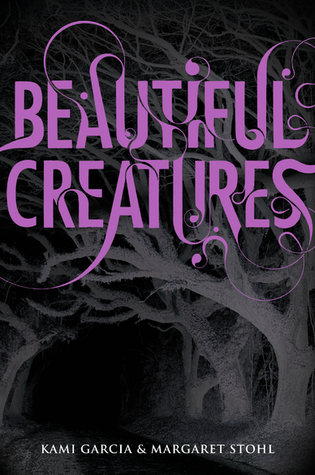
Beautiful Creatures Kami Garcia Margaret Stohl Lyndsey's Book Blog

Beautiful Creatures by Kami Garcia & Margaret Stohl

I loved the film when it came out, it was so moody and atmospheric. There’s just something about the South that makes it the perfect backdrop for stories with magic and witches and mystery. That said, I found the book so boring I had to give up halfway through. I tried, I really tried. I kept it on my bedside table for about a year but every time I picked it up and read a few pages I just couldn’t get into it, it wasn’t pulling me into the story or the characters’ lives.

This should have been exactly my cup of tea, I love YA, especially fantasy, anything with magic, curses, historical back stories and star crossed lovers. Sadly, it wasn’t to be.

Elizabeth is Missing Emma Healey Lyndsey's Book Blog

Elizabeth is Missing by Emma Healey

I was bought this one for my birthday because it was getting a lot of hype at the time, it isn’t at all my kind of thing but I gave it a shot because so many people had said how good it was. It wasn’t the worst, but it was sort of slow and I struggled with the MC as she’s an old lady with dementia.

Apparently, the author has a relative with dementia and it’s very well researched and depicted (I know someone whose mother has dementia and she read this book and said it was exactly like her experience with her mother). I think it’s great that mental illnesses like dementia and Alzheimer’s are being represented in literature, but I couldn’t really get on with the story due to it jumping about all over the place. I might return to this one eventually, my Mum is borrowing it right now (she’s had it months and hasn’t finished it either), but it’s definitely on my DNF pile for now.

Arrow blog divider

Like I said, I don’t DNF books very often, there are probably one or two more, but I tend to persevere to the end, even if it takes me months. Sometimes, when I come back to a book after a break I find I actually enjoy it, and it was me rather than the book that was just not quite right at the time.

My one piece of advice for you would be that if you DNF a book because you’re not feeling it right now, or not enjoying it even thought it would normally be right up your street, come back to it later. Read something else, or take a break from reading for a while – it’s easy to get overwhelmed by our TBRs and end up DNFing every other book because we weren’t hooked by page ten, but if you pick it up again later you might find yourself enjoying it.

One of the more controversial sides of DNFing is whether to write a book review or not. Some say you can’t review a book you didn’t finish, or didn’t even get halfway through, others are happy to learn from your bad experience and not waste their money. I can see it from both sides, as an author bad reviews, whilst part of the job, can be a huge blow to both confidence and reputation, and one where the reader didn’t even read to the end, where you might feel all their complaints would have been resolved (unlikely, and probably means you should have worked harder on the first half), might just feel like a slap in the face. As a reader they can be interesting and useful, if the reason the person didn’t finish isn’t something that bothers me I might still read it, but if I was having qualms about a certain book anyway I might now not.

Basically, DNF reviews have their place, and can be really useful, but explain your reasons for not finishing so that others can at least learn from your experience, don’t just shout about how much you hated it without any constructive criticism.

Which books have you DNFed? One series I think I’m going to DNF is Red Queen by Victoria Aveyard, I’ve read King’s Cage and just have no interest in continuing so I think I’ll call that one DNFed and maybe check out the spoilers for the next book so I at least know what happened.

Until next time!

Lyndsey

x

To DNF or not to DNF Lyndsey's Book Blog